The Jira alternatives most software teams compare are Linear, Plane, Shortcut, Zenhub and GitHub Projects, and the first thing that splits them is where your issues live afterwards. Linear, Plane and Shortcut are their own trackers, so leaving Jira means moving into another store. Zenhub and GitHub Projects work on the issues already in your GitHub repositories.
We make Gitsu, a client for GitHub Projects, so it appears here with its limits stated. Each tool gets the same four questions: what it is, what it costs on the free and paid tier, where the work lives, and who it suits. The order below is not a ranking. Every price was read from the vendor's own pricing page on 14 November 2026.
How do the Jira alternatives compare?
| Tool | Free tier | Paid entry | Work lives in | Best for |
|---|---|---|---|---|
| Jira (for reference) | Up to 10 users, 2 GB storage | Standard $8.48/user/mo; annual billed by user tier | Atlassian's cloud | Configurable workflows and mixed teams |
| Linear | 250 issues, 2 teams | Basic $10/user/mo, billed yearly | Linear's cloud | Engineering teams that want speed over configuration |
| Plane | Up to 12 users | Pro $6/seat/mo, billed annually | Plane's cloud or your own server | Self-hosting and a Jira-style feature set |
| Shortcut | Up to 10 users | Team $8.50/user/mo yearly, $10 monthly | Shortcut | Small teams that want stories, epics and iterations |
| Zenhub | 1 workspace, 2 repositories, 250 issues | Teams $4.99/user/mo, billed yearly | GitHub, plus Zenhub's planning data | Sprint reporting on GitHub issues |
| GitHub Projects with Gitsu | Projects on GitHub Free; Gitsu web app free | Gitsu Pro or Team Seats (pricing) | GitHub | Teams that want issues next to the code |
Teams usually leave Jira for speed, for the configuration they have piled up, or for cost as seats grow. None of these tools matches Jira's configurable workflows and permission schemes, so list the ones your process actually uses before you pick. The GitHub vs Jira comparison covers what GitHub does and does not replace.
What does Linear offer?
Linear is an issue tracker built for software teams, with cycles, projects, triage and keyboard-driven navigation. It is the alternative to try first when the complaint about Jira is that it is slow and heavy.
- Price: Free allows 250 issues and two teams. Basic is $10 per user per month billed yearly, and Business is $16 per user per month, on Linear's pricing page.
- Where work lives: in Linear, with a GitHub integration for pull requests.
- Best for: engineering teams that want an opinionated tool with little setup.
Linear gives up Jira's depth: fewer ways to bend the workflow to a process, and a free plan that fills at 250 issues. The Linear alternatives roundup covers the tools to try if you hit that cap.
What does Plane offer?
Plane is an open-source project tool with work items, cycles, modules and several layouts. Its main draw is deployment choice: the same plans run in Plane's cloud, on your own servers or air-gapped.
- Price: Free covers up to 12 users. Pro is $6 per seat per month and Business $13 per seat per month, both billed annually, on Plane's pricing page. Enterprise Grid is quoted.
- Where work lives: in Plane. Its pricing page lists a GitHub integration that syncs work items and states with GitHub issues.
- Best for: teams that need to control where their data sits, or want an open-source tool they can change.
Self-hosting moves the bill from seats to servers. Count the time to run and upgrade it before calling it free.
What does Shortcut offer?
Shortcut is a tracker built around stories, epics, iterations and objectives, with Docs for specs alongside the work. It covers the same ground as Jira's scrum setup for a small product team with far less to configure.
- Price: Free covers up to 10 users, one team and one workspace. Team is $8.50 per user per month billed yearly or $10 monthly, and Business is $12 yearly or $16 monthly, on Shortcut's pricing page. It lists an MCP server on every plan.
- Where work lives: in Shortcut, with GitHub, GitLab and Bitbucket integrations.
- Best for: teams of up to 10 who want a dedicated tracker and a free plan the size of Jira's.
What does Zenhub offer?
Zenhub adds sprints, epics, estimates, roadmaps and velocity reports on top of your existing GitHub issues. Of the five, it is the closest to Jira's sprint planning without leaving GitHub.
- Price: Free allows one workspace, up to 50 users, two connected repositories and up to 250 issues. Teams is $4.99 per user per month billed yearly, with up to 50 repositories and 5,000 issues, on Zenhub's pricing page. A 14-day Teams trial is available.
- Where work lives: in GitHub, with Zenhub's own planning data beside it.
- Best for: teams on GitHub that plan in sprints and want burndown and velocity reports.
Zenhub alternatives compares it with Gitsu in more detail.
What does GitHub Projects with Gitsu offer?
GitHub Projects is the board, table and roadmap layer built into GitHub, and Gitsu is a client for it: a web app and a macOS app that read and write your GitHub Projects boards. A team whose code is on GitHub already pays for the place the issues could live, and Jira hosts no code. Jira links to GitHub through the GitHub for Atlassian app, but the issue stays a Jira work item.
- Price: Projects is included on GitHub's Free plan. Gitsu's web app is free with no card. Paid Pro and Team Seats add the macOS app, its desktop agents and MCP access; current prices are on Gitsu's pricing page.
- Where work lives: in GitHub. Every Gitsu edit is an ordinary change to your project.
- Best for: developers and small teams who want dense lists, keyboard controls, nested AND/OR filters and bulk edits on those issues.
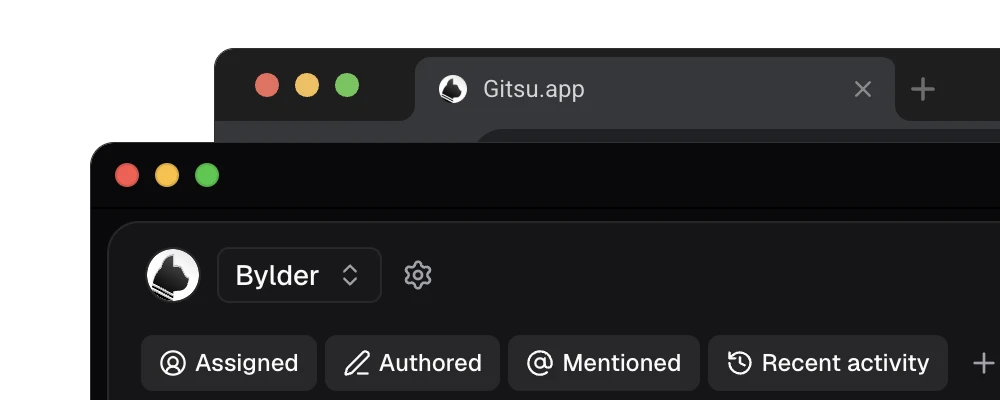
The limits are real. Gitsu shows one project at a time and loads up to 2,000 items per project. It supports priorities, estimates, existing iteration fields and a single-project roadmap, but has no automatic sprint rollover, velocity report or enforced workflow. A team that depends on Jira's workflow schemes or reports will miss them. Gitsu also has no Jira importer, only a Linear one, so the move from Jira is a job you do outside it; once the issues are in a GitHub Project, Gitsu reads them.
Which Jira alternative should you choose?
Choose by where you want the issues to live, then by the planning features you cannot drop.
- You want a fast, opinionated tracker and the team is engineering only: Linear.
- You need self-hosting or open source: Plane.
- A team of up to 10 wants a free dedicated tracker: Shortcut.
- You want sprints and velocity reports on GitHub issues: Zenhub.
- You need enforced workflows or non-engineers planning alongside: stay on Jira, and move only the engineering team if it is the one that wants out.
- You want the issues in GitHub with a fast daily client: GitHub Projects with Gitsu. Open one board in the free web app, run a filter you use for triage and try a bulk edit before paying for Seats.
For the Jira trade-offs against GitHub itself, read GitHub vs Jira. For the tools that sit on GitHub Projects, read the GitHub Projects tools roundup.
How we checked
Each alternative is sorted by where the issues end up, its own store or GitHub, and the Gitsu section is written from Gitsu's code: its 2,000-item loading cap and its one-project-at-a-time rule, with the planning features it does not have, and the lack of a Jira importer, named.
Frequently asked questions
What is the best free alternative to Jira?
It depends on team size and where the issues should live. Plane's Free plan covers up to 12 users, Shortcut's up to 10, and Jira's own Free plan up to 10 users with 2 GB of storage. Linear Free stops at 250 issues. GitHub Projects is included on GitHub's Free plan and keeps issues in your repositories; Gitsu's web app is a free client for those boards. Prices were checked on the vendors' pricing pages on 14 November 2026.
Which Jira alternatives keep issues in GitHub?
GitHub Projects and Zenhub work on the issues in your GitHub repositories, and Gitsu is a client that reads and writes GitHub Projects boards. Linear, Plane and Shortcut keep work in their own store and connect to GitHub through an integration.
Is there an open-source Jira alternative?
Plane is open source and can be self-hosted on your own servers. Its pricing page lists the same plans for cloud, self-hosted and air-gapped deployments, so check which plan your self-hosted features need and budget for running the server.
Can GitHub replace Jira?
For a software team whose work is issues and pull requests, yes: GitHub Projects gives boards, tables, roadmaps and custom fields at no extra cost. It does not replace Jira's enforced workflows, velocity reports or planning for non-engineering teams. The GitHub vs Jira comparison covers the gaps feature by feature.
Does Gitsu import issues from Jira?
No. Gitsu's web app has an importer for Linear, not for Jira, so moving Jira issues into GitHub is a separate job you do outside Gitsu. Once the issues are in a GitHub Project, Gitsu reads and edits them.
Try it on your own boardsGitsu opens your GitHub Projects boards in the browser. Sign in with GitHub and work on the same issues your team already uses.
Open the web app